
France has established influenza recommendations, but protection gaps remain among adults aged 65+
France has established influenza recommendations, but protection gaps remain among adults aged 65+
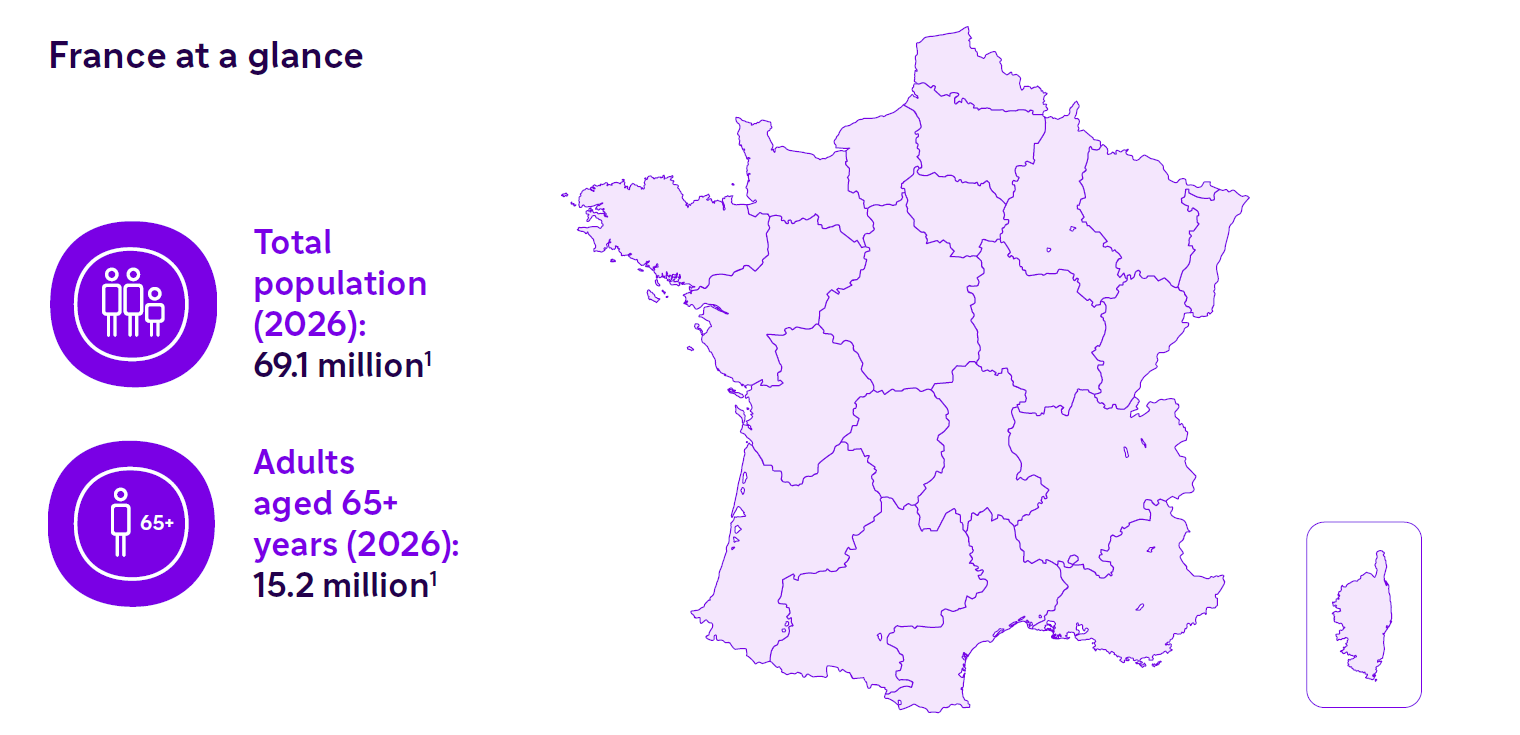
France has a recommendation framework and vaccination infrastructure to protect adults aged 65 and older against influenza, yet coverage remains well below the World Health Organization (WHO) target while severe influenza outcomes continue to be concentrated in adults aged 65+, reflecting several factors, including comorbidities, frailty, and age-related changes in immune function (immunosenescence).
Annual influenza vaccination is recommended for adults aged 65+ years, with preferential use of age-specific influenza vaccinations in this population; other influenza vaccine options may also be used in line with national recommendations and the current vaccination schedule.2,3
Influenza vaccination coverage among adults aged 65+ increased in 2025/26, but remains below the WHO target
Following several consecutive seasons of declining influenza vaccination coverage, France recorded an increase among adults aged 65+ years from 53.7% in 2024/25 to 56.7% in 2025/26, a 3.0 percentage-point improvement. Coverage remains well below the WHO target of 75%.10–13
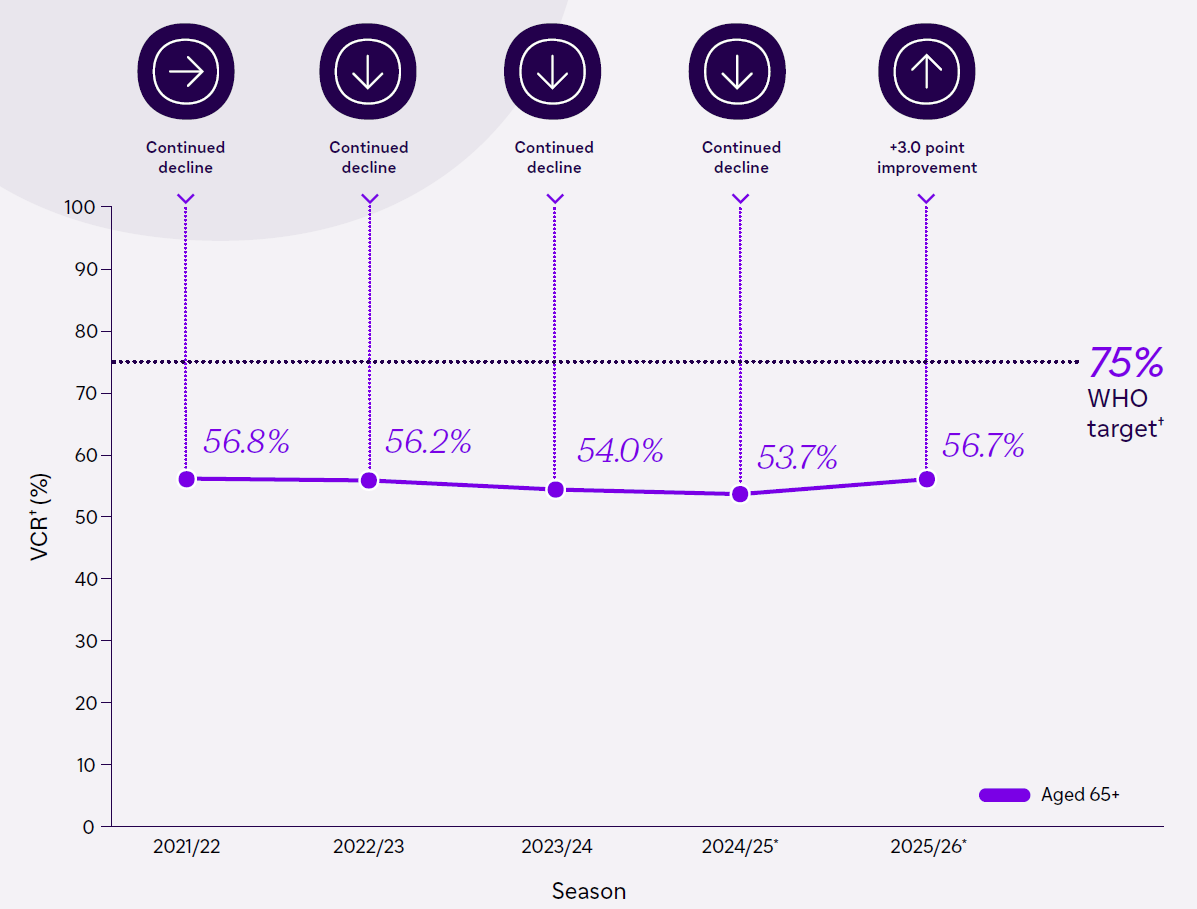
* Les estimations de couverture vaccinale sont arrêtées au 28 février 2025 pour la saison 2024/25 et au 28 février 2026 pour la saison 2025/26.11,12
† L’OMS : Organisation mondiale de la Santé.
56.7%
Influenza VCR 2025/26
Adults aged 65+10-12
+3.0 points
Change since 2024/25
From 53.7% to 56.7%10-12
18.3 points
Below WHO target
Gap to the 75% target in 2025/2610-12
Protection in practice
During the 2025/26 influenza season, France’s national health insurance system introduced targeted short message service (SMS) reminders encouraging eligible and at-risk individuals to get vaccinated as influenza activity intensified across the country.14
During the 2025/26 season, 28.9% of vaccinated adults aged 65 and older received an influenza vaccine preferentially recommended for their age group. National recommendations preferentially recommend age-specific influenza vaccines for this population, while also permitting the use of standard-dose vaccines.2,3,11
Adults aged 65+ continue to account for most severe influenza outcomes in France
In 2025/26, influenza vaccination coverage increased, yet severe outcomes remained concentrated among adults aged 65+. National surveillance recorded 24,000 hospitalizations following emergency department attendance for influenza/influenza-like illnesses (ILIs) across all ages.11,12
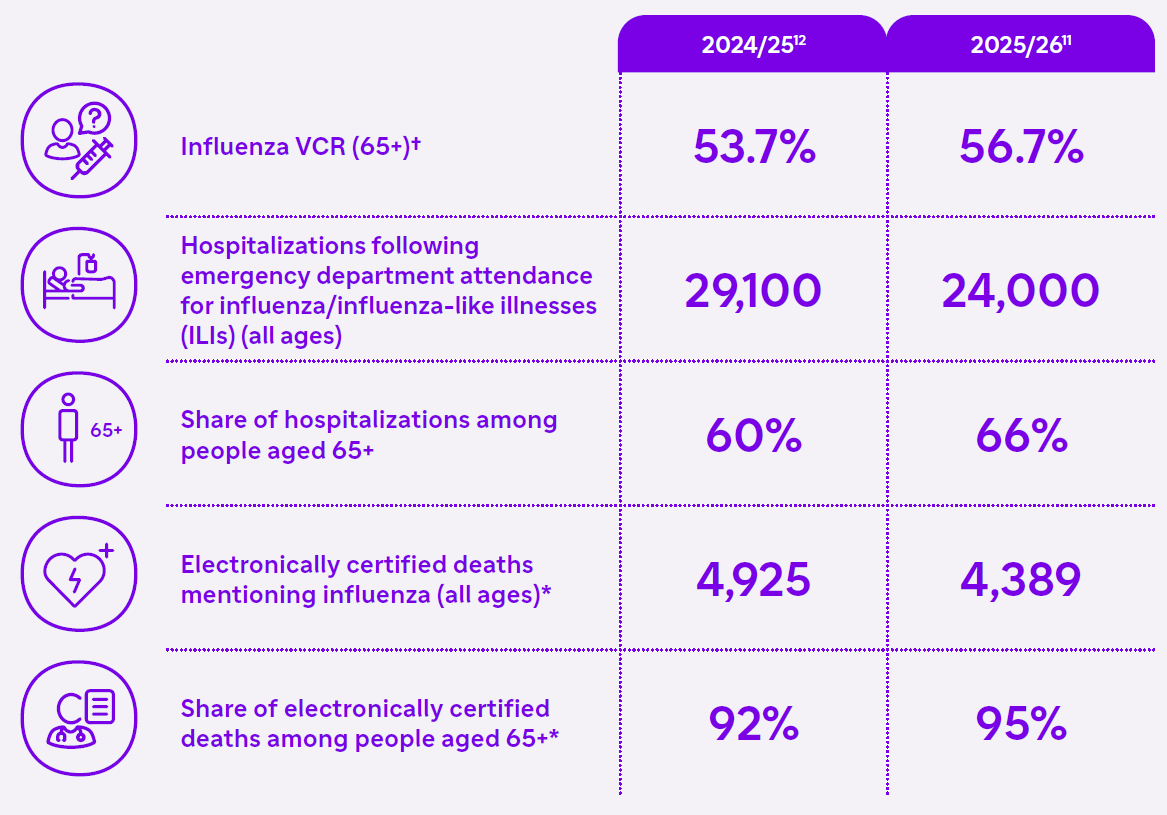
* Mortality figures represent electronically certified deaths mentioning influenza as directly causing or contributing to death. Electronic death certification covered approximately 50% of national mortality at the end of 2024 and varied by region and place of death.
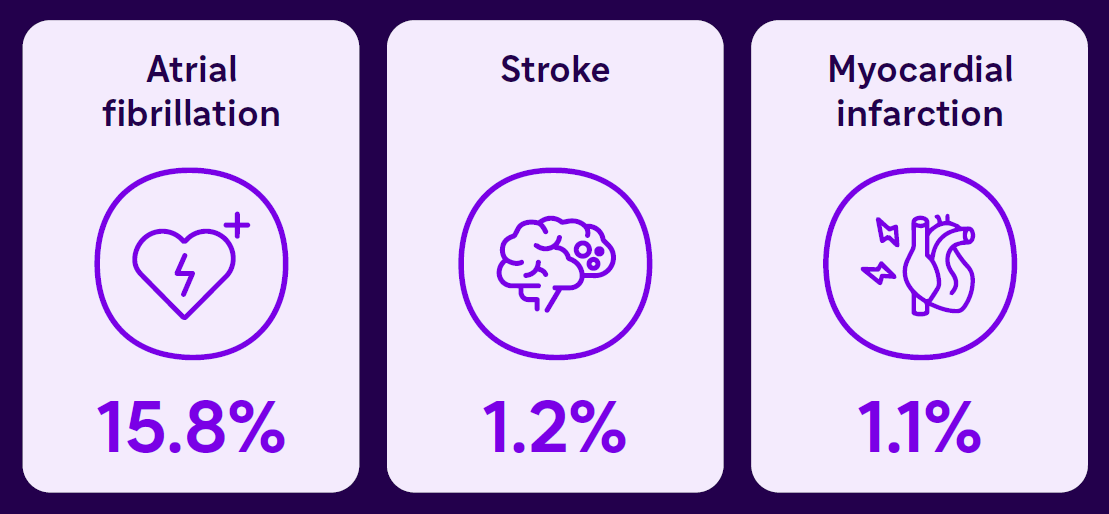
Cardiovascular complications reported during influenza hospitalization in France
A nationwide retrospective cohort study using the Programme de médicalisation des systèmes d’information (PMSI) database identified 45,819 patients of all ages hospitalized with seasonal influenza in France between December 1, 2018 and February 28, 2019. These findings describe complications occurring during influenza hospitalization rather than the excess cardiovascular risk attributable to influenza, reinforcing that severe influenza can affect multiple organ systems, not just the respiratory tract.15
Surveyed cardiologists and pulmonologists report influenza-season pressure across multiple areas of care
When considering influenza and its potential complications among adults aged 65+, cardiologists and pulmonologists reported a high or very high impact on several areas of care during the influenza season. The findings reflect the views of 100 surveyed secondary-care HCPs in France (50 cardiologists and 50 pulmonologists).
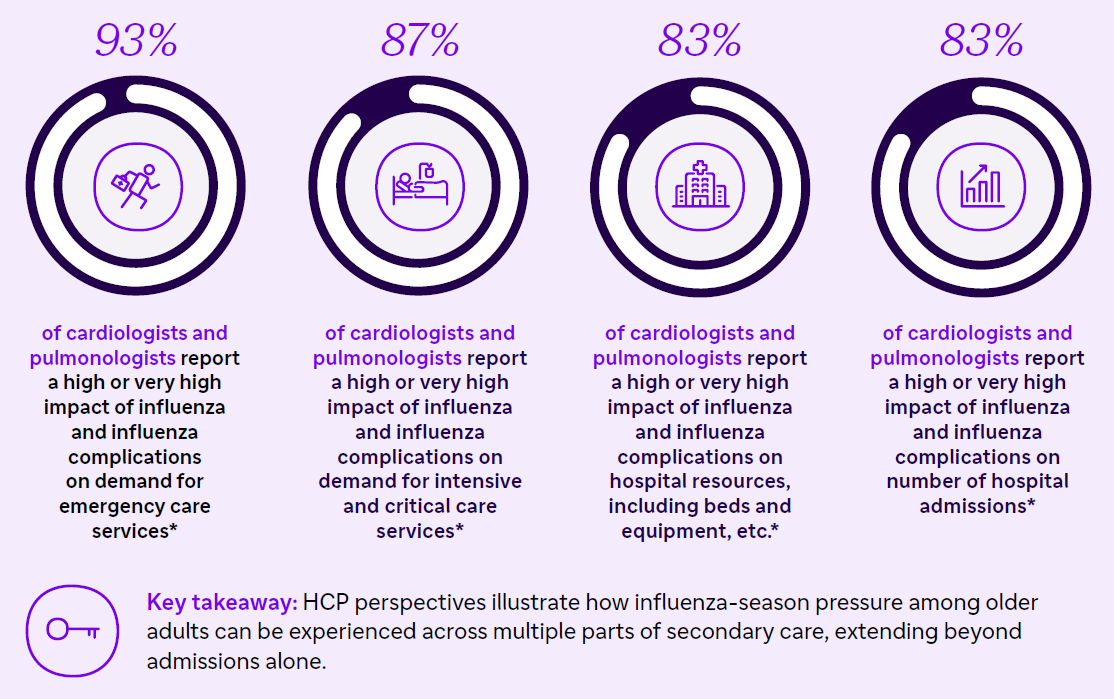
* Ipsos online survey conducted on behalf of Sanofi among HCPs in France; fieldwork conducted 5 June–2 July, 2026. Base: Secondary-care HCPs (n=100; 50 cardiologists and 50 pulmonologists). Full SB5 and SB4 question wording, sample details and qualitative caveats are reproduced in the methodology notes below.
The annual economic burden of influenza in France is substantial
The consequences of influenza are felt not only by patients and healthcare systems, but also across the wider economy. Historical annual cost estimates were compiled in a 2025 briefing.17,18
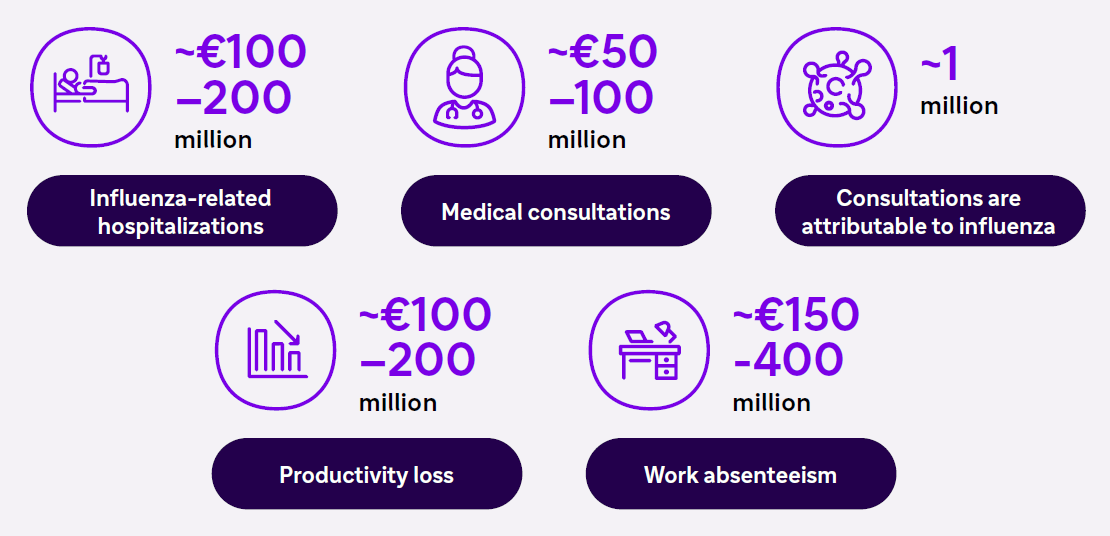
A 2025 briefing compiling historical estimates reports that influenza could result in 1.5–2 million lost workdays annually, while employees who continue working when ill may experience productivity reductions of 20–50%.18
These estimates help to illustrate the substantial societal impact of influenza beyond healthcare alone.
National influenza guidance is widely recognized, but implementation gaps remain
Since May 2025, HAS has preferentially recommended age-specific influenza vaccines for adults aged 65+, while standard-dose vaccines remain an option in line with national recommendations, as part of a broader approach to influenza prevention that also includes recommended infection-prevention measures. Translating national guidance into protection also depends on how consistently influenza prevention is integrated across healthcare settings.2,3
Surveyed HCPs reported high familiarity with national influenza vaccination guidelines specifically in relation to adults aged 65+, while secondary-care findings point to opportunities to strengthen coordination across the care pathway.
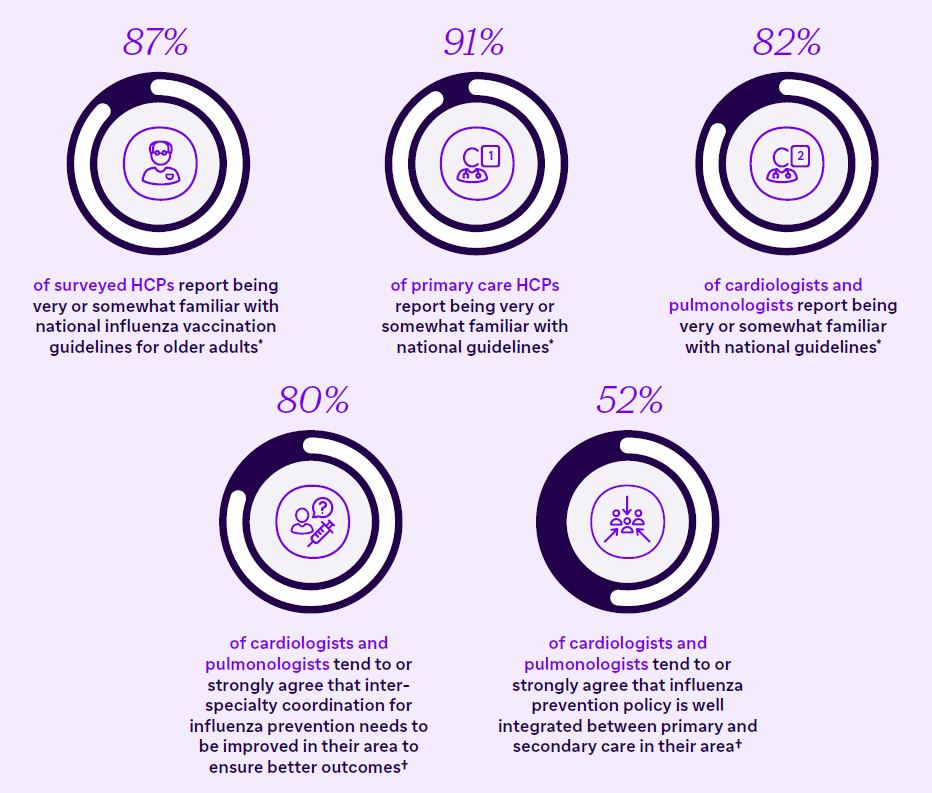
Source : sondage Ipsos mené pour Sanofi en France, du 5 juin au 2 juillet 2026. Questions PB1/SC1, SA5 et PB3/SC3 ; texte intégral et bases dans les notes méthodologiques ci-dessous.
Three priorities to close the gap between risk and protection in France
Closing the gap between influenza risk and prevention including vaccination will require action across three areas: increasing vaccination uptake among adults aged 65+, strengthening implementation of national vaccine recommendations, and integrating influenza prevention more consistently across the care pathway.
1
Strengthen influenza prevention through infection-prevention measures and support implementation of national vaccination recommendations for adults aged 65+
Increase influenza vaccination coverage among adults aged 65+, while supporting implementation of national recommendations that preferentially recommend age-specific influenza vaccines for this population, while also permitting the use of standard-dose vaccines. Reinforce the importance of infection-prevention measures.
2
Integrate influenza prevention across the care pathway
Make every appropriate healthcare interaction an opportunity to protect adults aged 65+ years from severe influenza outcomes, including through routine chronic disease management, specialist care and appropriate opportunities for vaccination in hospital and secondary care settings.
3
Strengthen the systems that support consistent implementation
Strengthen the practical systems and coordination needed to translate national recommendations into consistent protection across healthcare settings, including better visibility and sharing of influenza vaccination status and monitoring of vaccination coverage rates and vaccine types.
Explore Flunomics
Download the France report for the complete country analysis, including vaccination coverage rates, severe influenza outcomes, the economic burden, HCP perspectives, implementation gaps and priorities for France.
Visit the global Flunomics page to explore evidence across countries, including global findings, methodology and comparisons of influenza vaccination coverage.
Methodology notes
SB5 / SB4 — secondary-care pressure
Source: Ipsos online survey conducted on behalf of Sanofi among HCPs in France; fieldwork conducted 5 June–2 July, 2026. Results reflect the views and practices of the surveyed sample.
Base: Secondary-care HCPs (n=100; 50 cardiologists and 50 pulmonologists).
* Question SB5: Cardiologists and pulmonologists were asked to what extent different aspects of secondary care are impacted by influenza season and the potential for influenza complications in older adults; figures shown represent respondents selecting “very high” or “high impact” (other answer options were: “no impact”, “very low impact”, “low impact”, “moderate impact”, and “I don’t know”).
† Question SB4: Cardiologists and pulmonologists were asked in their own words to summarize the main impact influenza and its complications among adults aged 65+ have on the secondary-care health system, considering firstly overall system-level impact and secondly the impact on their day-to-day practice. Unprompted open-ended responses were analyzed using GenAI-assisted thematic analysis of verbatim free-text responses to identify key themes. Themes shown represent mentions from open-ended responses and should not be interpreted as majority consensus. Quote reproduced from an individual cardiologist response.
PB1/SC1 / SA5 — guidance and coordination
Source: Ipsos online survey conducted on behalf of Sanofi among HCPs in France; fieldwork conducted 5 June–2 July, 2026. Results reflect the views and practices of the surveyed sample.
Base: All HCPs (n=251; 101 general practitioners (GPs)/family practitioners (FPs), 50 pharmacists, 50 cardiologists and 50 pulmonologists).
* Question PB1/SC1: HCPs were asked how familiar they were with national influenza vaccination guidelines when it comes to flu prevention specifically in relation to adults aged 65+. Figures shown represent respondents selecting “I am very familiar” and “I am somewhat familiar” (other answer options were: “I am not very familiar”, “I am not at all familiar” and “I don’t know”).
† Question SA5: Secondary-care HCPs only (n=100; 50 cardiologists and 50 pulmonologists) were asked to what extent they agreed or disagreed with statements concerning influenza prevention and vaccination among adults aged 65+ and how this is managed in their area; figures shown represent respondents selecting “strongly agree” or “tend to agree” (other answer options were: “strongly disagree”, “tend to disagree”, “neither agree nor disagree” and “I don’t know”).
PB3/SC3 — qualitative quotation
Source: Ipsos online survey conducted on behalf of Sanofi among HCPs in France; fieldwork conducted 5 June–2 July, 2026. Results reflect the views and practices of the surveyed sample.
Base: All HCPs (n=251; 101 GPs/FPs, 50 pharmacists, 50 cardiologists and 50 pulmonologists).
* Questions PB3/SC3: PCPs (n=101), pharmacists (n=50), cardiologists (n=50) and pulmonologists (n=50) were asked about the practical implementation of influenza prevention guidelines for older adults, whether national, local or regional, including what works well in practice and what does not. Unprompted open-ended responses were analyzed using GenAI-assisted thematic analysis of verbatim free-text responses to identify key themes. Themes shown represent mentions from open-ended responses and should not be interpreted as majority consensus. Quote reproduced from an individual pulmonologist response.
References
- Institut national de la statistique et des études économiques (INSEE). Demographic report 2025. Available at: https://www.insee.fr/en/statistiques/8726555 [Last accessed: October 2026].
- Haute Autorité de Santé. Pandemie grippale : révision de la stratégie vaccinale. Recommandation. 2025. Available at: https://www.has-sante.fr/jcms/p_3636256/fr/pandemie-grippale-revision-de-la-strategie-vaccinale [Last accessed: October 2026].
- Ministère de la Santé, des Familles, de l’Autonomie et des Personnes handicapées. Calendrier des vaccinations et recommandations vaccinales 2026. Available at: https://sante.gouv.fr/IMG/pdf/2026_07_calendrier_vaccinal-2026_a4_93p_v11.pdf [Last accessed: October 2026].
- Direction de l’information légale et administrative (Premier ministre). Seasonal influenza vaccine. Service-Public.fr. Available at: https://www.service-public.gouv.fr/particuliers/vosdroits/F714) [Last accessed: October 2026].
- Skaarup KG, et al. Influenza and cardiovascular disease pathophysiology: strings attached. Eur Heart J Suppl. 2023;25(Suppl A):A5–A15.
- Warren-Gash C, et al. Laboratory- confirmed respiratory infections as triggers for acute myocardial infarction and stroke: a self-controlled case series analysis of national linked datasets from Scotland. Eur Respir J. 2018;51:1701794.
- Andrew MK, et al. Persistent functional decline following hospitalization with influenza or acute respiratory illness in adults aged 65 years and older. J Am Geriatr Soc. 2021;69:696–703.
- Eurostat. Demography of Europe: 2026 edition. Available at: https://ec.europa.eu/eurostat/web/interactive-publications/demography-2026 [Last accessed: October 2026].
- Institut national de la statistique et des études économiques (INSEE). Pyramides des âges – Projections de population 2026–2070 – Scénarios. Available at: https://www.insee.fr/fr/outil-interactif/5896897/pyramide.htm#!y=2026&v=52&t=1&c=0 [Last accessed: October 2026].
- Santé publique France. Flu vaccination coverage data by age group. Available at: https://www.santepubliquefrance.fr/en/vaccination/flu-vaccination-coverage-data-age-group [Last accessed: October 2026].
- Santé publique France. Bulletin infections respiratoires aiguës. Édition nationale. Semaine 15 (6 au 12 avril 2026). Saint-Maurice : Santé publique France ; 2026. Available at: https://www.santepubliquefrance.fr/infections-respiratoires-aigues/grippe/bulletin-national/infections-respiratoires-aigues-grippe-bronchiolite-covid-19-bilan-de- la-saison-2025-2026 [Last accessed: October 2026].
- Santé publique France. Infections respiratoires aiguës (grippe, bronchiolite, COVID-19). Bilan de la saison 2024–2025. Available at: https://www.santepubliquefrance.fr/maladies-et-traumatismes/maladies-et-infections-respiratoires/grippe/documents/bulletin-national/infections-respiratoires-aigues-grippe-bronchiolite-covid-19-.-bilan-de-la-saison-2024-2025 [Last accessed: October 2026].
- World Health Organization. Understanding drivers of influenza vaccine uptake. Available at: https://www.who.int/news-room/feature-stories/detail/understanding-drivers-of-influenza-vaccine-uptake [Last accessed: October 2026].
- Assurance Maladie. Nouvelle campagne de vaccination contre la grippe saisonnière. 7 octobre 2025. Available at: https://www.assurance-maladie.ameli.fr/presse/2025-10-07-cp-cnam-vaccination-antigrippale [Last accessed: October 2026].
- Piroth L, et al. Comparison of the characteristics, morbidity, and mortality of COVID-19 and seasonal influenza: a nationwide, population-based retrospective cohort study. Lancet Respir Med. 2021;9:251–259.
- Veronese N, et al. Measuring the impact of hospitalization for infectious diseases on the quality of life of older patients in four European countries: the AEQUI longitudinal matched cohort study (2020–2023). Clin Microbiol Infect. 2025;31:847– 854.
- Lemaitre M, et al. Estimating the burden of influenza-related and associated hospitalizations and deaths in France: An eight-season data study, 2010–2018. Influenza Other Respir Viruses. 2022;16:717–725.
- Nile Consulting. Note coût de la grippe en France. Mars 2025. Available at: https://www.nile-consulting.eu/drop/Note_cout_de_la_grippe_21032025. pdf [Last accessed: October 2026].

MAT-GLB-2604352-v1.0-11/2026